
Concrete Slab Calculator
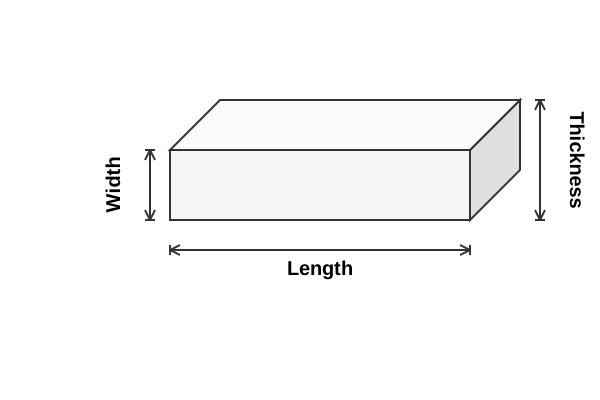
Enter the slab length, width, and thickness to estimate concrete volume and ready-mix bag quantities.
Bag Configuration
Concrete Volume
Cubic Yards
How many ready mixed bags
Estimated Cost
$0.00
How to calculate concrete for a slab
Measure the finished slab length and width, then enter the planned thickness. The calculator converts mixed feet-and-inch measurements into cubic feet and divides by 27 for cubic yards. Metric measurements are converted to cubic meters.
Thickness matters as much as area. A patio or walkway may use a different slab specification than a driveway, garage floor, or equipment pad. Confirm the thickness, base, reinforcement, and local requirements before ordering. Our slab thickness guide explains common project ranges.
For an irregular slab, divide the plan into rectangles and calculate each section separately. Add the section volumes to get the project total. Curves can be estimated with smaller rectangles or a separate shape calculation. Treat thickened edges, grade beams, ramps, and isolated equipment pads as separate volumes because their depth differs from the main field of the slab.
Use finished form dimensions, not the nominal room or lot size. Check the length and width at several points, and verify thickness from the prepared subgrade to the intended finished surface. A low subgrade or bowed form increases volume across the whole area. The calculator does not account for displaced volume from reinforcement, which is normally too small and uncertain to deduct from an order.
Material quantity is only one part of slab planning. A stable base, drainage, forms, reinforcement, joints, placement access, finishing, and curing all affect the finished work. Confirm that the chosen slab specification is appropriate for the soil, loads, climate, and local requirements before using its dimensions here.
Concrete suppliers normally recommend ordering a practical allowance for uneven excavation, spillage, and form variation. This calculator reports the geometric volume so you can see the base quantity clearly; discuss the final order allowance with your supplier.
For a small slab, compare the rounded-up bag count with the cost and pace of mixing. Larger pours can exceed the amount a small crew can mix and place consistently before the concrete begins setting. Ask local ready-mix suppliers about minimum orders, short-load charges, access, and delivery timing before deciding between bags and a truck.