
Concrete Footing Calculator
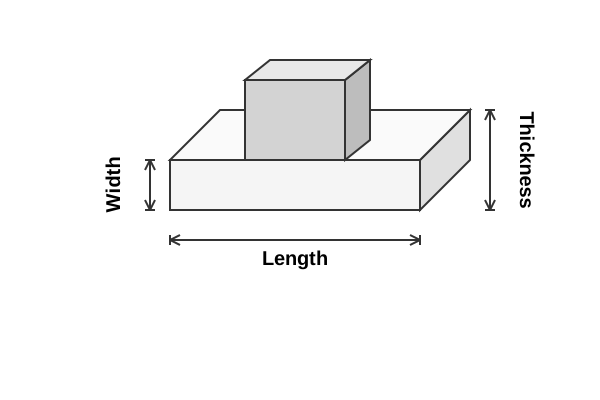
Enter the total footing length, width, and depth to estimate the concrete required for the pour.
Bag Configuration
Concrete Volume
Cubic Yards
How many ready mixed bags
Estimated Cost
$0.00
How to estimate a continuous concrete footing
Use the total length of the footing run, its average width, and its average depth. The calculator treats the footing as a rectangular volume. For several identical disconnected footings, add their lengths together before calculating; for different sizes, calculate each group separately and total the results.
Footing dimensions are structural decisions. Wall loads, soil bearing capacity, frost depth, drainage, and local code can all change the required width and depth. The calculator estimates material after those dimensions are known; it does not design the footing.
A footing spreads the supported wall or column load over a larger soil area. Its width is therefore related to the wall thickness, but there is no safe universal width-to-wall multiplier. The required projection on each side depends on the design load and allowable soil pressure. Keep the supported wall located as shown on the approved plan rather than assuming it is always centered.
Measure an excavated trench at several locations. Use separate calculations when one run changes width or depth, and include steps in the footing as distinct rectangular sections. If a plan includes pads, piers, keyways, or thickened intersections, calculate those shapes separately and add them to the continuous run instead of inflating every footing dimension.
Earth-formed trenches often vary more than formed footings. Remove loose soil and confirm the bottom elevation before measuring. Water, sloughing trench walls, over-excavation, and utility crossings can change the real quantity and may require corrective work before placement. Do not average away a section that must be rebuilt or reviewed.
Excavations are rarely perfectly uniform, so compare the geometric result with field measurements before ordering. See the frost depth guide and the reinforcement comparison for planning context.
The displayed bag count is useful for small formed sections and repairs, but a long footing may demand continuous placement that is difficult to achieve with hand-mixed batches. Review access, crew capacity, placement sequence, reinforcement clearance, and the supplier's ordering allowance before selecting bagged or delivered concrete.